Everybody Loved Him
Some thoughts on moral conscience, Riefenstahl and the diaries of Victor Klemperer
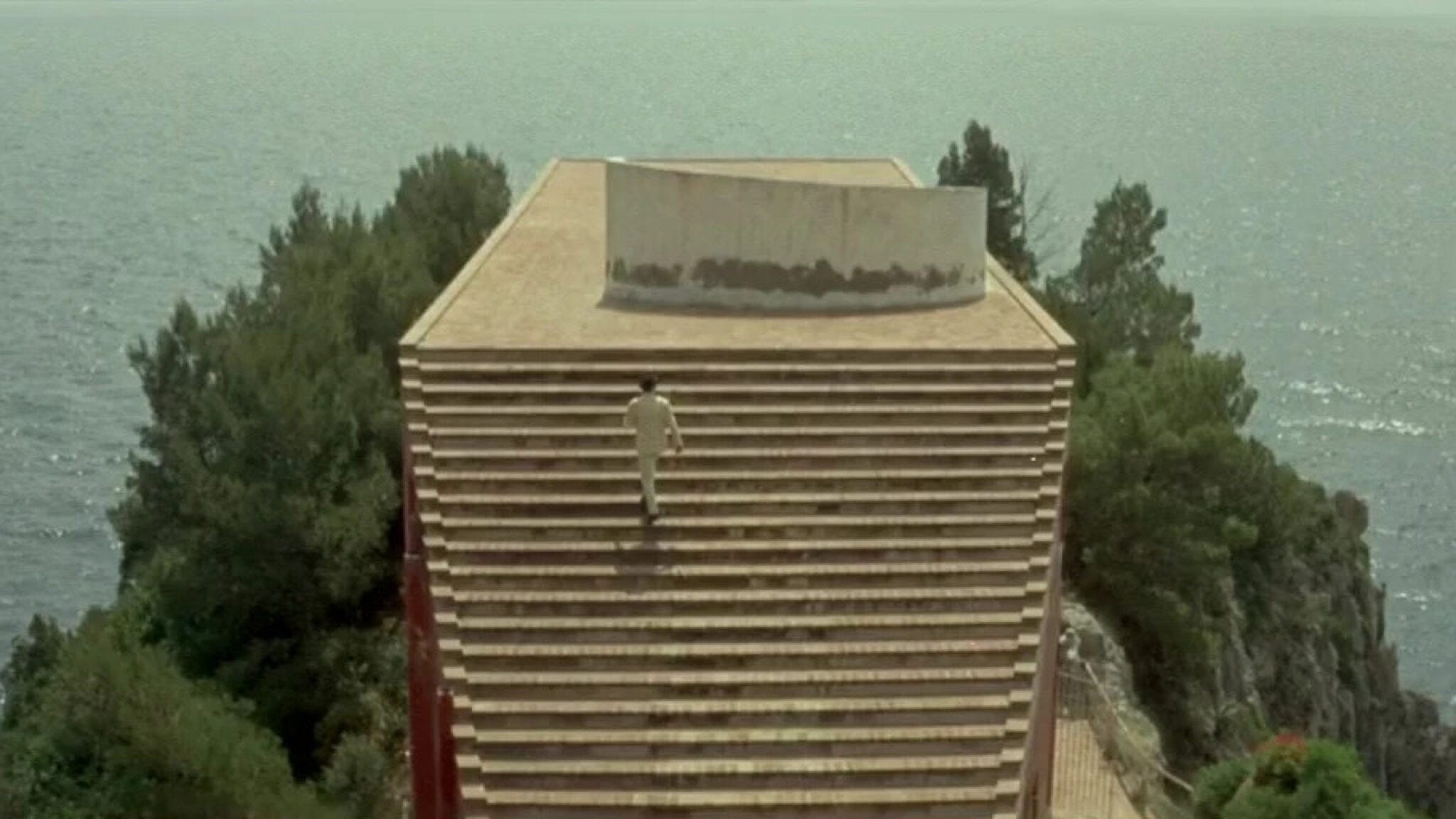
Sometimes I miss the calm and confident atmosphere of academia: people discussing minute details and complex arguments about the world, as if there was actually something like order and sense to hold onto. Abstraction can be so attractive: cool and precise, elegant and sophisticated. Like modernist architecture on a cliff above the sea.
The last time I had that craving, I snuck into a seminar on political theory, hoping to bathe in the smooth surroundings of rigorous thought. It was going well: they were arguing about how to conceptualize ecocide, the logic of commodification, the conditions for an international court of justice for ecological rights. The discussion was turning more heated the closer it turned to ethics and at one point the famous Hegelian professor from New York said, “Well, I do not believe in morality. I do not believe in a conscience and all that stuff.” There was a silence.
“I’ll tell you story,” the professor continued. “It’s the story of Socrates’ trial. So we know that Socrates was convicted to death for corrupting the youth of Athens, and that he drank hemlock at dawn and lay down and died. But the night before, in fact, his students, had come to him with a perfect plan of escape that would have allowed him to live on. And Socrates rejected it. Why?
Well, Hannah Arendt writes that Socrates does not escape his punishment because he knows that life is only valuable in the city. In Athens, among his equals. Plato believes in a morality outside the city. He discovered critique, but he drew the false inference that there is a truth, that there is morality. But in fact morality is nothing but critique. Critical theory is all there is.”
I felt a bit dizzy when I listened to that. In the break, I turned to my neighbour, a young man with a neat T-shirt and glasses, who was clearly very bright and committed. “This may seem like a silly question – but where do we go from here? If there is no morality outside the city, how do we tell right from wrong when our society’s values are shifting? What do we do if there’s nothing like a moral compass?” He was very nice and gave me some book recommendations. But I still felt like I couldn’t take my eyes away from the cliff.
I have been thinking a lot about this question of a moral compass. Every now and then, I have felt myself at odds with people with whom I didn’t expect it. I felt hostility in public when I asked questions that to me seemed obvious, and discomfort when I didn’t bring them up, and nobody else did. I increasingly roll my eyes at mainstream news headlines, not just at what happens but also at the angle the wording suggest. I generally try to keep an open mind and really listen to people with different opinions and experiences. But at what point do I become complicit?
Many of these thoughts turn on the legacy of the Nazi period and the Second World War. Questions of war and nationalism. This time feels closer than ever, and not just because of the centenaries. This legacy is so omni-present in Germany that it’s easy to ignore that it is far from clear-cut. There are “easy” villains to condemn and horrific acts to mourn, no question. But what about the more complicated and subtle processes of complicity, and the abdication of responsibility?
The film director Leni Riefenstahl is a good example. In his recent documentary RIEFENSTAHL (2024) the director Andres Veiel dives into her meticulously kept archive of hundreds of boxes of film material, recordings, photographs, articles, even taped phone conversations to reveal a woman who was obsessed with her self-image and in absolute denial of responsibility. The strength of the film, I think, lies in the question of moral responsibility it puts to the viewer.
Riefenstahl was insanely ambitious and craving approval and admiration. She never denied that Hitler “put a spell on her”, but she thought nothing wrong with it. In one of the strongest scenes of the film, taken from a German talkshow in the 1970s, she is confronted with a woman, roughly her age, who was active in the resistance. Riefenstahl is appalled by being exposed like this: “Why should I, of all people, have resisted him? Everybody loved him!”

That’s the phrase that really stuck with me. What is especially shocking in the film, is to listen to the phone calls from the TV audience that Riefenstahl received – and taped – after this performance. Call after call, she is being thanked for her honesty, for standing up for the majority of the people, for rejecting the nasty allegations of wrong-doing. Because “everybody loved him”. It’s absolutely chilling to think of that post-war German audience rejoicing to see someone who denies their responsibility. But I think it really shows just how difficult it must have been to disagree, to speak up, to act, when the majority of people – of institutions, of power – tell you another narrative of what is right and necessary at this moment in time.
The film RIEFENSTAHL was welcomed as timely and relevant, and it is. “What a terrible, corrupt woman,” I heard people in the audience say. And “what an important reminder to stand against the rise of the extreme right today”. I’m really happy that we all agree on that. For now. But I couldn’t shake the feeling that the real depth of the moral appeal of the film was slightly circumnavigated. What are the things we choose not to look at these days? Where do we shy away from our political responsibility and gradually slide into complicity?
I couldn’t help but think of Israel’s war on Gaza, on the continuous and unquestioning support of Germany for the government of Netanyahu, both politically and militarily, and how that was hardly a question of discussion in the German public sphere. It makes me wonder about how much people in Germany long to be on the right side of history, and are afraid of potential ambiguity. It has been “right” to unquestioningly support the state of Israel ever since it existed because the Holocaust was so clearly wrong. But is that how it works?
A comfort in this moral agony have been the diaries of Victor Klemperer, a German-Jewish literary scholar who kept a diary from 1918 until his death in 1959. Klemperer miraculously survived the Nazi persecution, thanks to his marriage to a non-Jewish German woman, his status as a professor and sheer luck. Barred from work and isolated from public life, he secretly worked on a book he called LTI, Lingua Tertii Imperii, the language of the Third Reich. Being a linguist and literary scholar, he meticulously notes down and analyses the shift in language during the Nazi period. It’s fascinating – and it makes you sensitive to the patterns of words and phrases used today.
But what I love about his diaries is the movement of his thinking. It’s always alert but it’s full of twists and turns, questions, doubts. It’s steeped in everyday observations and Klemperer’s own feelings, including the less flattering ones. The diaries start in 1918 with the grumpy observation of his jealousy of his wife’s success as a pianist and his own frustrated academic ambitions. He is skeptical of the Communist Spartacist movement and shocked at the short-lived Bavarian Council Republic in Munich, making sure to declare his conservative-liberal convictions to safeguard his career opportunities.
Decades later, after the war, he seems almost surprised by himself when he joins the Communist party in the early GDR. Suddenly, after 1945, he finds himself a hero, flooded with high ranking job offers and dubious declarations of friendship by people who “were on his side all along”, only in secret. He is acutely aware of the hypocrisy. But what I was really impressed by was his ability for self-scrutiny. When he attends a party congress as a high ranking official, he writes: “Everybody’s mood captivating, carrying me along. Underground always: It’s like in Nuremberg, but now you are part of the party and sitting on top. But then again always: this time, so God will, it’s the cause of the people and of the good.”
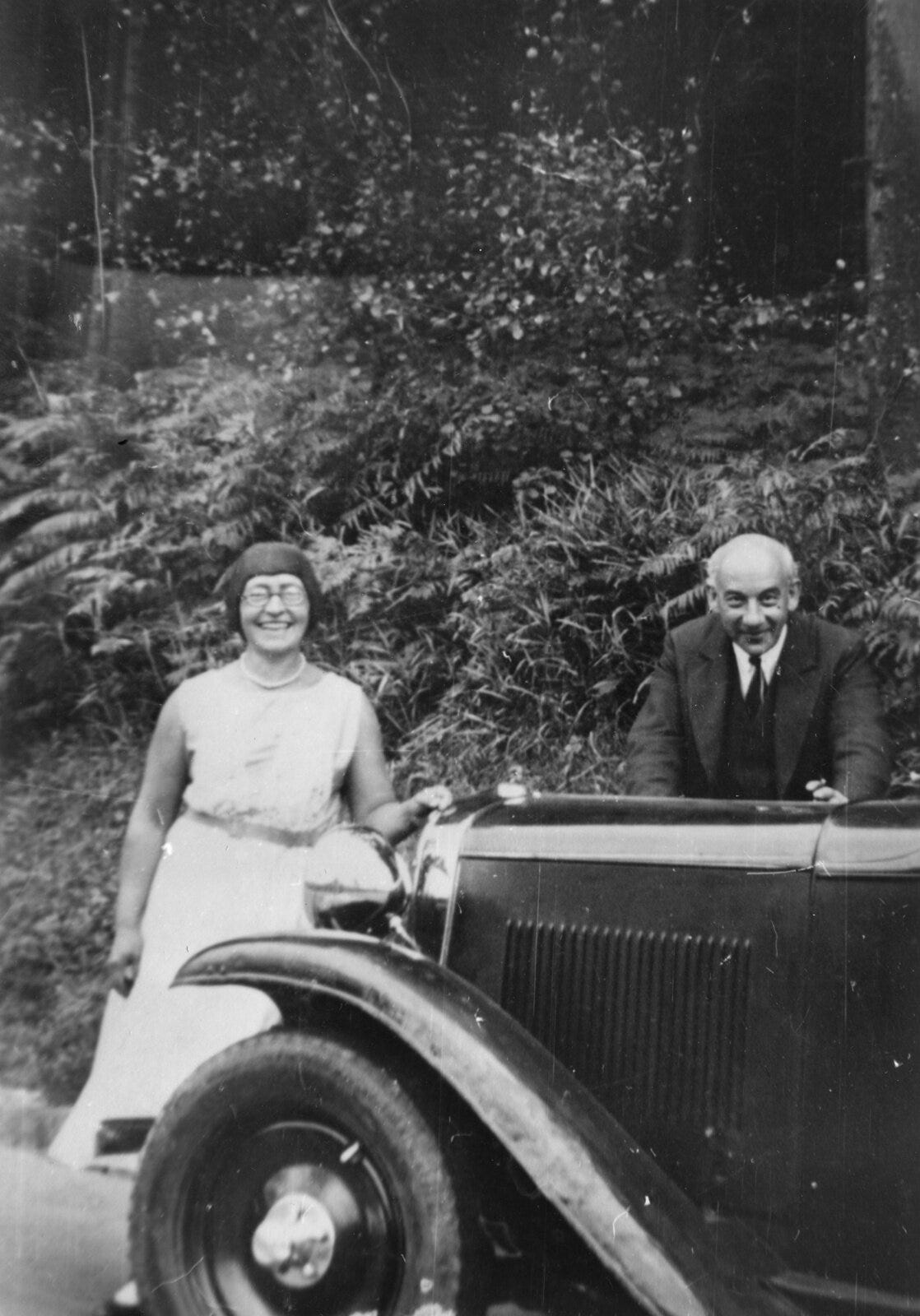
In between these two episode, of course, the world has turned upside down. For Klemperer, the 1930s brought a painful experience of increasing isolation, discrimination and rejection by bourgeois society, while his wife, who has given up her pianist career, suffers from depression and needs care. Despite their precarious situation, they become obsessed with building their own house in a suburb of Dresden, into which they pour all their money. “No! What are you doing, Victor?,” you want to shout when you read about his struggle to finance an extension. “They will take it away from you! Get out while you can!” But instead, Victor Klemperer decides he must buy a car.
His romance with driving is at once desperate and hilarious. From the start, he is obviously absolutely terrible at driving. His teacher tells him to give up. But Klemperer is determined and eventually manages to get his license, just about. Even then, he reports that people who drive with him fear for their lives and vow never to repeat the experience. But he clings to it with a passion and you realize that this is about much more. It starts as a kind of midlife crisis rebellion, but it becomes his last form of freedom. Imperfect, dangerous, uncomfortable, far from smooth. When it is eventually taken away from him, too, the only thing that remains for him is writing his diary. Which is equally imperfect, full of doubt and ambiguity but carried forward by an amazing courage and persistence. Maybe that’s the best we can hope for.